
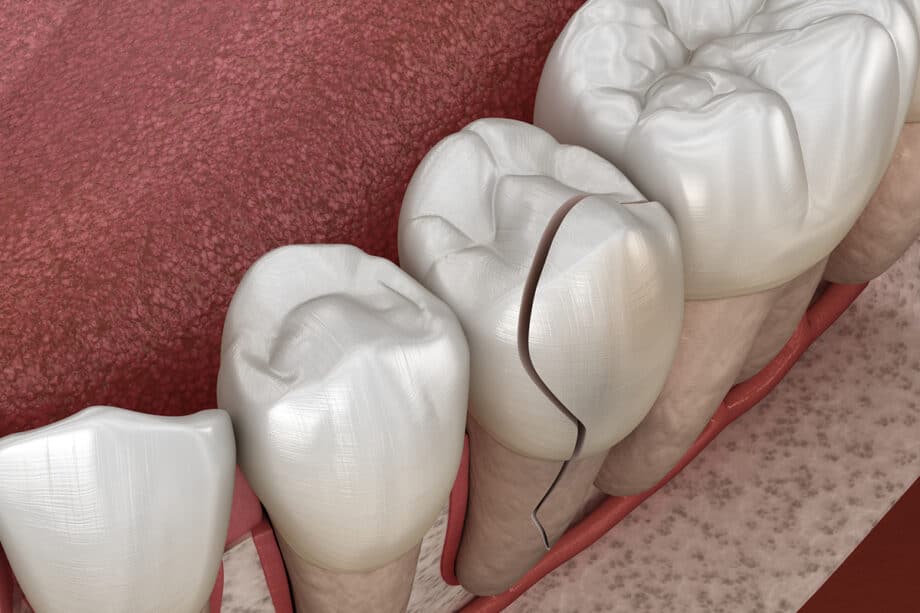
A cracked tooth is a common dental issue. Whether it's a small crack, a fractured cusp, or a split tooth, prompt treatment is necessary. Early evaluation at the first sign of a crack increases the chances of saving the tooth.
If you have a cracked tooth or suspect that you might, you may be wondering if it will heal on its own. Unfortunately your teeth do not have regenerative abilities, meaning that professional intervention is essential to repair the tooth.
Learn more about cracked teeth and what to do if you experience symptoms from the experts at Eagle Endodontics.
What Happens When a Tooth Cracks?
A tooth consists of two basic parts, the crown and the root. The crown is the portion of the tooth that is visible above the gumline. The root of the tooth sits below the gumline, firmly anchored in the jaw for support. Cracks typically form in the crown of the tooth, but may also begin or extend into the root.
Types of cracks include:
- Craze lines. Tiny cracks in the surface of the tooth that are minor and typically do not require treatment.
- Cracked tooth. A crack in the crown of the tooth that may vary in depth and length.
- Fractured cusp. A corner of a molar that breaks off from the rest of the tooth.
- Vertical root fracture. A crack that originates in the root, resulting in an untreatable tooth that will need to be extracted.
- Split tooth. A severe crack that splits the tooth in half, also resulting in extraction.
Causes of Cracked Teeth
Cracked teeth may be caused by a variety of situations, such as:
- Dental trauma, such as a fall or a sports injury.
- Biting down on hard foods such as nuts or hard candy.
- Using your teeth to open containers or remove tags.
- Chewing on non-food items such as pens and pencils.
- Frequently chewing on ice.
Weakened enamel increases the risk of a cracked tooth, which may be caused by tooth decay, teeth grinding, or a fluoride deficiency.
Can a Cracked Tooth Heal on Its Own?
Unlike other body parts such as internal bones, tooth enamel does not regenerate. This means that a cracked tooth will not heal on its own, and will likely only worsen without treatment. Bacteria may enter the tooth through a crack, leading to an infection that compromises the health of the tooth and poses risks to your overall health.
Signs You May Have a Cracked Tooth
- Intermittent pain. Pain caused by a cracked tooth may come and go, making you question whether or not to seek treatment. If the tooth pain continues to come back, contact an endodontist.
- Sensitivity to heat and cold. Extreme sensitivity to heat or cold in a certain part of your mouth may indicate a crack that leads to the soft center of the tooth where the nerves are located.
- Swelling of the gums. Swollen gums are a sign of an infection that may be due to a cracked tooth.
- Pain when chewing. If you experience pain in a specific area when chewing, you may have a cracked tooth.
Some cracks are not visible, which is why it is important to recognize the symptoms. Seek a professional diagnosis if you experience any of the signs of a cracked tooth. Early evaluation and treatment leads to better outcomes.
Treatment Options for a Cracked Tooth
- Dental bonding. For minor cracks, composite material may be used to fill the crack. However, this is often considered to be a temporary or lower quality treatment.
- Dental crowns. The most common treatment for a cracked tooth is a dental crown, a tooth-shaped cover that is placed over the existing tooth for protection.
- Root canal therapy. A cracked tooth may need a root canal to treat the dental pulp inside the tooth to remove or prevent infection.
- Extraction and replacement. Some cracked teeth are too severe to save. The best course of treatment may be to extract the tooth and replace it with a bridge or dental implant.
Endodontists focus on saving teeth whenever possible, providing advanced treatments to preserve your natural tooth. Treatment recommendations are determined on a case by case basis, providing personalized care according to your individual needs.
Why Early Treatment Matters
If you have symptoms of a cracked tooth, don’t wait. The sooner you seek professional treatment the greater the chances of saving your natural tooth and the lower your risk of complications such as infection, abscess, or tooth loss. Specialized treatment by an endodontist offers the best chance of a positive outcome for your oral health. Contact us at Eagle Endodontics today to schedule an appointment.
Frequently Asked Questions About Cracked Teeth
Can a small crack in a tooth get worse over time?
Yes, it is common for a crack to worsen over time. Cracks often expand due to the pressure of chewing or grinding your teeth, growing longer and deeper.
When should I see a specialist for a cracked tooth?
Seek treatment at the first sign of a cracked tooth. If you’re experiencing pain, severe sensitivity, swollen gums, or other unusual symptoms, contact an endodontist.
Is a cracked tooth always painful?
Not all cracked teeth cause constant pain, but symptoms may appear when chewing or with temperature changes, making diagnosis more challenging.
Can a cracked tooth lead to an infection?
Bacteria can enter the tooth through the crack, potentially reaching the pulp and causing infection or the need for root canal treatment.
How can I prevent a tooth from cracking?
You can reduce your risk of a cracked tooth by avoiding hard foods, wearing a nightguard if you grind your teeth, and maintaining regular dental checkups to catch issues early.
At Eagle Endodontics, we are dedicated to helping patients preserve their natural teeth through advanced, specialized care. Our team uses state-of-the-art technology and a patient-focused approach to diagnose and treat complex dental concerns with precision and comfort. If you are experiencing tooth pain or suspect a cracked tooth, we are here to help you find the right solution. Contact us today to schedule an appointment.